By Lilee Thompson | Published 03 June 2026
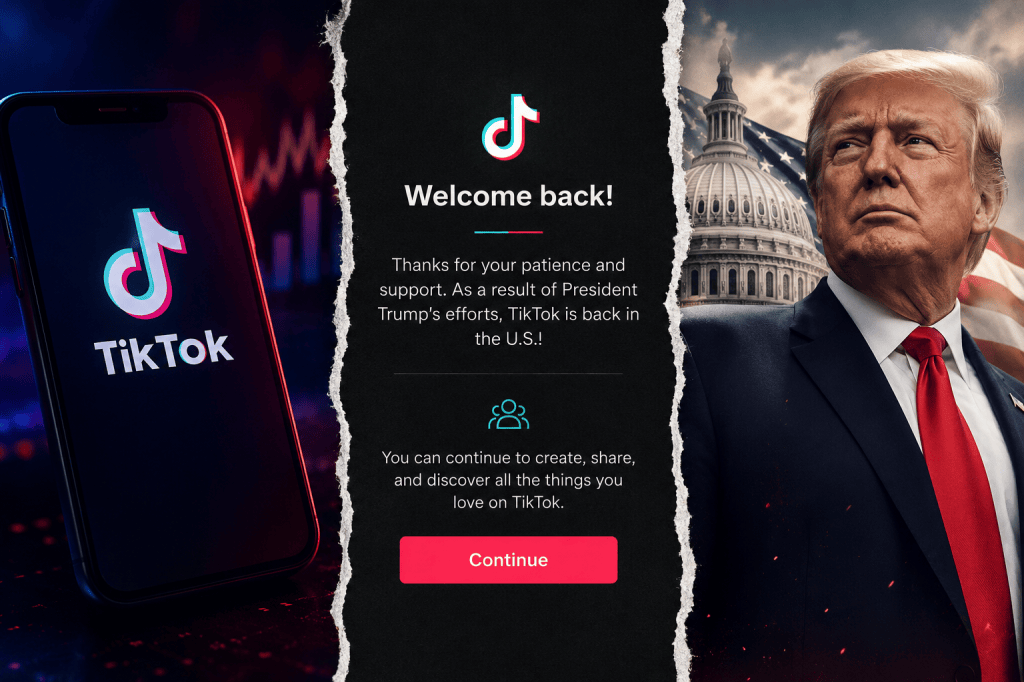
TikTok has transformed global communication by allowing its users to share media content, information and political opinions and views worldwide. Tiktok has become a main platform for users to express themselves, especially in regard to politics. A recent political dispute that was frequently discussed was Donald Trump attempt to ban TikTok for all American users. This controversy created conversations in regard to political power, freedom of speech, fake news, manipulation of algorithms and a range of other concerns.
This blog will discuss and critically analyse the attempt by Donald Trump to ban Tiktok in America by using global media theories such as Global Village, the Public Sphere, Algorithmic Culture, Participatory Culture and Fake News. With the use of these theories, the blog will explore how digital media platforms, like TikTok are becoming increasingly more important as it shapes political communication especially in this new day and age.
Global Village
The Global Village theory, created by Marshall McLuhan, explains that modern media and communication technologies connect people worldwide, which makes it feel like one big “village” (McLuhan 1964). Through social media platforms, like TikTok, users are able to share, react and communicate information and participate in global discussions despite how far away you are from another user. Donald Trump’s attempt to ban TikTok in America sparked global conversations which quickly made this an international issue, involving users worldwide. As situations developed, users shared and interacted with audiences and spread information internationally across the platform.
This matters because it shows how media platforms, in this case TikTok, have transformed communication to make it a globally networked system to promote connectedness. This is a clear example of Global Village as the political issue and conversation on TikTok connected people across the world. This theory effectively explains how communication technologies allows users to be connected globally without it being limited by location of audiences. However, the theory also reveals how misinformation and political conflict can spread globally just as quickly as information.
Fake News
Fake news is the false or misleading information that is presented as factual news. This news usually spread rapidly through social media platforms, such as TikTok. Herman and Chomsky, scholars who argues that the spread of fake news has the power to form public opinions and sway how audiences understand political and social issues (Herman & Chomsky 1988). The TikTok ban created confusion from users due to the conflicting reports, rumours and misinformation surrounding the ban. Users encountered varying claims in regard to the timeline of the ban, potential impact and the overall reasoning for the ban.
This matters because fake news can completely alter how some sees a political or social issue. With how rapid news spreads through social media platforms, it can create confusion for users consuming this news and effect how they see said political issue. There are many different perspectives surrounding fake news, many critics claim that platforms like TikTok contribute and enable the spread of fake news and propaganda. These users supported the ban attempted by Donald Trump. Although fake news can distort viewers understanding of political issues, the Public Sphere theory focuses on how digital platforms facilitates users to discuss and debate these issues in a communicative space.
The Public Sphere
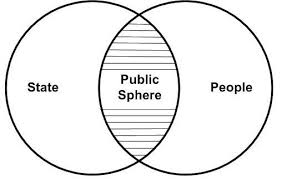
The Public Sphere theory was created, Jürgen Habermas, explains that media and communication create spaces where people can discuss important social and political issues publicly. It focuses on how communication shapes public opinion, influences politics, allows audiences to participate and creates public debate (Habermas 1989). Tiktok has become an important space for political discussion, where users engage with information, form opinions and participate in debate (Buzzell et al. 2024) and during Donald Trump’s ban attempt, it was no different. Users participated in conversations involving topics like freedom of speech, censorship and national security. This example shows that digital media platforms like TikTok allow users to participate and contribute to important social and political conversations publicly. Critics believe this is how misinformation is spread and discussions can become toxic but the positive effects such as giving the audience a voice and encouraging diverse opinions ensures having that public space for users to debate is beneficial. This example shows how social media platforms can function as a space for public debate. While the Public Sphere theory explains how TikTok created a space for users to discuss and debate the Donald Trump’s attempt at banning TikTok, Participatory Culture demonstrates how users became active contributors to conversation rather than observers.
Participatory Culture
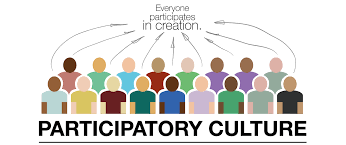
Participatory Culture, a theory created by Henry Jenkins, argues that audiences are active contributors rather passive observers of media (Jenkins 2006). The main idea of this theory was that in traditional media, audiences mostly consumed content and communication was one way. Understanding this theory shows that audiences also create and share content, communication is interactive, and users help shape media conversations. The TikTok ban debate demonstrated this clearly as users did not simply watch political developments but actively shared opinions, created videos and engaged with other users. This ability to participate allowed regular users to contribute to political discussion at such a large scale. By using this as an example you can clearly see how this theory highlights how social media has transformed audiences into users who can influence conversations and spread information globally. Although TikTok helped create a platform in which users could participate in these political conversations, Algorithmic culture examines how algorithms influence what content is pushed out to users.
Algorithmic Culture
On social media, algorithms decide what you see and in what order. Algorithmic culture is a theory created by Ted Striphas and it suggests that algorithms shape digital culture by influencing what content people see, engage with and discuss online (Striphas 2015). On TikTok, the “For You Page” decides what videos go viral and gain traction, meaning they play a massive role in shaping political conversations.
While Chander (2022) examines the legal and national security arguments in regard to Trumps attempt to ban TikTok, the case also highlights concerns surrounding the platforms algorithms. Concerns around TikTok were not only about data collection but its ability to create and share information, to all of its near 2 billion users (Shubham 2026), through its recommendation algorithm. During the TikTok ban, users claimed their feeds had changed, were being censored and monitored (McMahon, L & Hays, K 2026). Due to the change of ownership, these concerns are very relevant because it makes you think, how much control do they have of what content I see? Are we not seeing or hearing the full picture due to it being censored? Whether these claims are true or false, they highlighted public concerns about the power of algorithms to shape perspective and influence political conversation.
Conclusion
Donald Trump’s attempt to ban TikTok shows the significant role digital media plays in contemporary society. By applying the five global media theories above, Global Village, Fake News, the Public Sphere, Participatory Culture and Algorithmic Culture, it is clear how important digital media platforms, like TikTok are for global communication. TikTok is a powerful communication tool that shapes public opinion, political conversation and global interactions in the digital age.
List of References
Buzzell, A, Chevalier, O, Pokrywa, L & Burkell, J 2026, ‘Tiktok as a threat to democracy? Conceptions of cognitive security in discourse on the TikTok ban’ Journal of Cyber Policy, pp. 1-29. doi:10.1080/23738871.2026.2665270.
Chander, A 2022, ‘Trump v. TikTok’ Vanderbilt journal of transnational law, Vol. 55 (5), pp. 1145-1175. Viewed 1 June 2026.
Habermas, J, 1989, ‘The Structural Transformation of the Public Sphere: An Inquiry into a Category of Bourgeois Society’, Cambridge: Polity Press. Viewed 28 May 2026.
Herman, E.S. and Chomsky, N, 1988, ‘Manufacturing Consent: The Political Economy of the Mass Media’, New York: Pantheon Books. Viewed 27 May 2026.
Jenkins, H, 2006, ‘Fans, bloggers, and gamers: exploring participatory culture’, New York: New York University Press. Viewed 28 May 2026.
Mansoor, S 2026, ‘TikTok’s algorithm favored Republican content in 2024 US elections’ The Guardian, viewed 3 June 2026, https://www.theguardian.com/technology/2026/may/06/tiktok-pro-republican-algorithm-2024-election
McMahon, L 2025, ‘When could TikTok be banned and will Trump save it?’, BBC News, viewed 1 June 2026, https://www.bbc.com/news/technology-53476117
McMahon, L & Hays, K 2026, ‘TikTok US pushes back on claims it is censoring content’, BBC News, viewed 1 June 2026, https://www.bbc.com/news/articles/ckgjedpn8p8o
McLuhan, M, 1964, ‘Understanding Media: The Extensions of Man’, New York: McGraw-Hill. Viewed 27 May 2026.
Shubham, S 2026, ‘How Many People Use TikTok in 2026 [Active Users Stats]’, Demandsage, viewed 3 June 2026, https://www.demandsage.com/tiktok-user-statistics/
Striphas, T, 2015, ‘Algorithmic culture’, European Journal of Cultural Studies, Vol. 18, pp. 395-412. doi: https://doi.org/10.1177/1367549415577392. Viewed 29 May 2026.
 lileethompson77-nqstk